Nature’s systems (forests, watersheds, ecosystems) are interdependent, collaborative, and self-reinforcing. So why do we still expect individual companies to solve systemic climate challenges alone?
This World Environment Day, there is (as always!) much that is challenging. The latest World Meteorological Organization warnings on the combination of climate change and El Niño point to a short-term world of further heating for many of us. The political context for our climate action discussions has changed and leaders are having to evolve their approaches—just as nature does when confronted by a challenge.
Nature’s ecosystems (such as forests, wetlands and mangroves) demonstrate interdependence, collaboration and innovation. Nature is constantly active. Nature is iterative, adapting to the changes in ecosytems. Nature evolves unusual coalitions to deal with unusual conditions. The same ought to be true of business. What I’ve found, throughout my career, is that the most intractable sustainability challenges share one characteristic: no single organisation of any kind has enough of an incentive, the capital, the scale, or the reach to solve them alone. So far so normal—there have been many announcements of partnership approaches, collaborations and coalitions to tackle that over the last 20 years. A few have stood the test of time and delivered at scale. Sadly many, especially in the financial sector, have dialled down or stepped back in recent years. And some companies that set highly ambitious climate targets have had to delay or water them down in the evolving context of their industries.
Some collaborations remain stuck because the economics don’t quite yet work. There has been excellent work to understand water scarcity in key countries, its shared risks for ecosystems, communities and the major companies that it affects across beverage, food, textiles, data centres and many other industries. But at scale action has been lacking because the investment case is hard. Finding the right partners, the political will and a business case for serious capital is a tough mix.
We have seen some notable successes. The EV transition in the United Kingdom has been accelerated by major corporate operators working together and committing to buying vehicles and supporting policy to catch up. In agricultural supply chains, there are now ambitious action partnerships around key commodities such as soy and fisheries. The pattern is consistent in its practicality: when business leaders align around a practical shared outcome, change becomes that much more possible.

That’s why I joined Xynteo. What attracted me was its capability to lead action coalitions on thorny sustainability challenges, bringing together different actors and innovating, as nature does. If nature teaches us anything, it is that resilience comes from active interconnection, a lesson Xynteo has learnt well and doubled down on.
Take Build Ahead in India. Seventy-three per cent of the building stock that will exist in India in 2050 hasn’t been built yet. The materials, codes, and supply chains chosen in the next decade will lock in embodied carbon for the next 40 years. The technologies to do this differently, i.e. low-carbon cement, green steel, recycled aggregates, already exist. The gap is deployment. Build Ahead brings together the producers, developers, financiers, and buyers who need to move together: JSW Cement, Lodha, JLL, Godrej Construction, among others. When these players align on shared standards and commit capital jointly, market-ready solutions start becoming mainstream. That is a $70–80bn market opportunity by 2030 and a 40-year emissions problem that gets solved in this decade.
Vikaasa tackles different but equally systemic challenges: plastic circularity and sustainable mining in India. Again, the principle is the same. These are industries where individual corporate action produces marginal results. Pre-competitive collaboration, sharing standards, de-risking investment, and aligning regulation are the only mechanisms that produce change at scale.
In Europe, our Europe Delivers coalition has just entered a new chapter, launching four cross-industry project sprints focused on Defence, Critical Minerals, Energy, and Data & AI. We are working to provide a structured platform for companies to move beyond alignment and commit to shared initiatives that no single organisation could pursue alone.
And connecting these two geographies, India and Europe, is the India-UK/Europe Green Corridor launched at India Exchange 2026 in February. India’s manufacturing scale, demographic growth, and decarbonisation ambition on one side and Europe’s technology, capital, and transition experience on the other. The Corridor is a commercial platform built for co-investment, co-development, and the kind of pre-competitive alignment that both sides need to move at speed.
This is what systemic climate action actually looks like in practice. Not just companies publishing net-zero pledges and making incremental progress alone, but business leaders from different sectors and geographies committing together to actually invest in shared outcomes. Acting together at scale is what makes the difference.
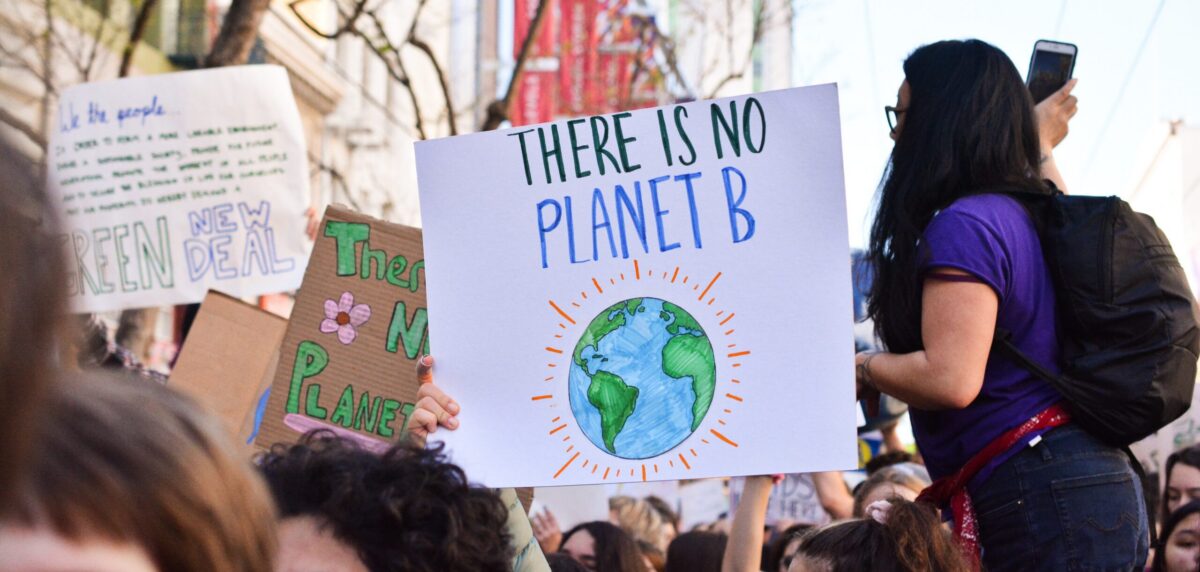
On World Environment Day, we talk about signals. The signal I would most like to see businesses send is this: that we are done making commitments without action. And action requires investment. Let’s move on from solving climate challenges company by company, to industry by industry, and even beyond to the unusual coalitions that unlock those hard-to-abate problems. The ecosystems that survive are the most actively interconnected.
For further information, follow us on social media (LinkedIn I Twitter), or Contact Us to find out how we can help your leaders and organisation create people and planet-positive impact.