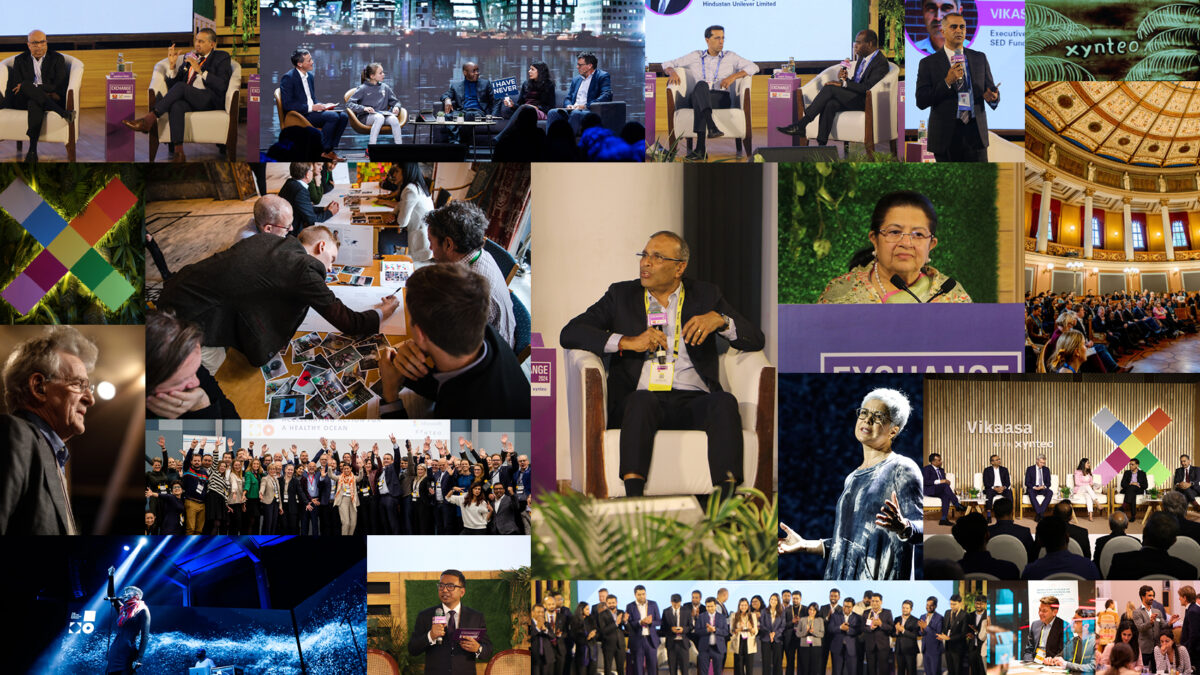
As our flagship convening, the Xynteo Exchange brings together global leaders to spark pioneering ideas and foster new business collaborations. This article outlines why we’re embarking on a unique two-part Exchange to build an India–UK/Europe Green Corridor that can forge the collaborations we need for a truly sustainable future.
In the last week, the EU–India Free Trade Agreement (FTA) has entered the global conversation, the way the UK-India FTA had a few months earlier—not just as a trade milestone, but as a signal of how geopolitical, economic, and climate priorities are beginning to converge. At their core, both agreements recognise a simple truth: India and the UK/Europe are deeply complementary. Indian scale, skills, and speed, meeting UK/European capital, technology, and innovation can create a powerful engine for growth.
Why this matters now
Trade agreements, however ambitious, do not execute themselves.
What determines whether this moment translates into real impact is what happens next—how capital is deployed, how technology is scaled, how partnerships are structured, and how leaders collaborate across borders and sectors. This is the context in which we are convening a two-part Exchange, with the India Exchange 2026, presented by Aditya Birla Group in collaboration with Xynteo, to be held on 24-25 February in New Delhi, as part of building the India–UK/Europe Green Corridor.
More on India Exchange 2026We are immensely grateful to our Strategic Partners, Mahindra Group Hindustan Unilever, Marico Innovation Foundation, Khaitan & Co, and JSW Cement, for their vision and support in making this possible.
The Green Corridor is an operational construct rather than a diplomatic one. It exists to move from intent to implementation—especially in sectors where the stakes are highest: industrial decarbonisation, clean mobility, and circularity.
One of the clearest lessons from working with large incumbents across sectors is that incrementalism is no longer sufficient. Pilots have their place, but they cannot deliver transformation at the pace or scale the moment demands. What is required is a dual shift: rewiring the core business from within—how capital is allocated, how assets are run, how value chains are designed—while simultaneously building ecosystems beyond the organisation. Partnerships with technology providers, startups, investors, governments, and peers are no longer optional; they are foundational.
At the same time, the transition itself is changing in nature. For years, sustainability was framed primarily through the lens of efficiency—using fewer resources, reducing emissions, optimising processes. That focus, while necessary, is no longer enough. In a world defined by climate volatility, supply‑chain disruption, and social fragility, resilience and regeneration have become commercial imperatives. Businesses must now actively rebuild natural and social capital, not merely extract from it, if they are to remain viable over the long term.
This is where the Green Corridor becomes especially relevant. What we are seeing now is a shift from high‑level declarations to concrete execution. Capital is beginning to move. Technologies are ready to scale. Talent is increasingly global. The India–UK/Europe axis is emerging as a vital pipeline—one that can demonstrate how regional blocs collaborate to solve global decarbonisation challenges. In short, the Green Corridor is about execution, not declaration.
Why part one is in India
India sits at the confluence of scale, ambition, and possibility. We are still building a large part of our future infrastructure, industry, and cities. Unlike many developed economies, our story is not primarily about retrofitting what already exists. It is about building new—and building right.
If Europe offers a powerful laboratory for retrofitting legacy systems, India can be the global demonstration of what it means to grow fast and grow sustainably. The choices we make in the next decade—in energy, mobility, manufacturing, materials, and finance—will shape not just India’s trajectory, but the global climate outcome.
Turning ambition into action, however, requires alignment across three interconnected levers. Capital must be structured in ways that de‑risk early adoption and reward long‑term outcomes. Breakthrough technologies must be deployed at scale, particularly in hard‑to‑abate sectors. And markets must be created—through policy, procurement, and demand signals—for sustainable products and services to compete and win.
The India Exchange 2026 has been designed with this in mind. Across two days, leaders will move from inspiration to co‑creation to execution—defining opportunity roadmaps, shaping partnerships, and identifying projects that can travel the corridor from idea to implementation.
Ultimately, none of this works without leadership that is willing to evolve. The next era of growth will favour leaders who are comfortable with radical collaboration, long‑term systems thinking, and the humility to learn from founders, innovators, and younger organisations that are often closer to the edge of change. The challenges we face are too complex and too expensive to solve alone.
The India Exchange is an invitation to lead differently—and to build, together, the mechanisms that turn momentum into measurable impact.
Why part two is in London
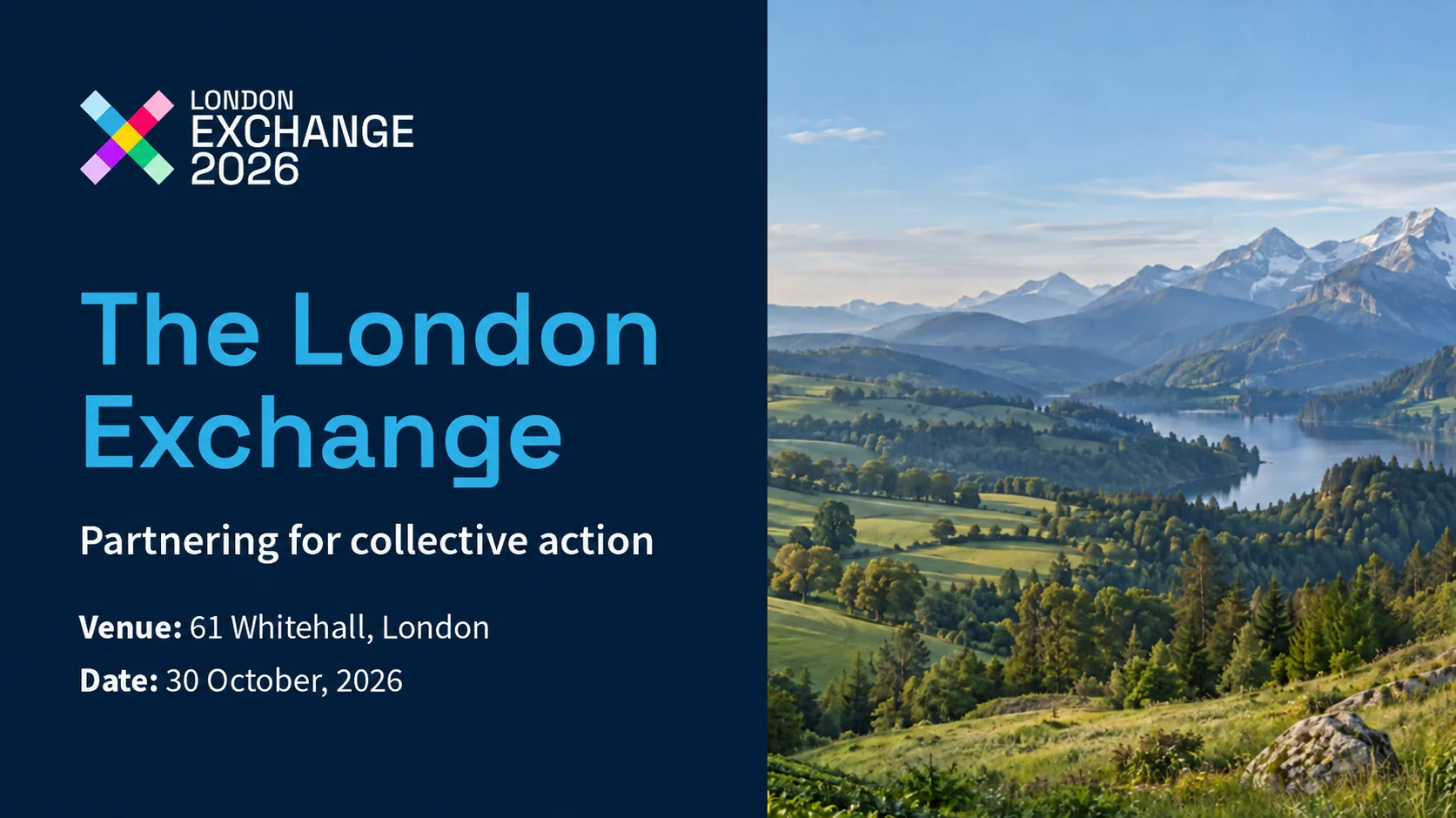
If part one is about grounding the platform in India’s realities and opportunities, part two in London is about activating the other half of the equation.
London—and more broadly, the UK and Europe—is where a powerful combination of capital, technology, regulatory innovation, and industrial decarbonisation experience already exists. Over the past two decades, these economies have made significant progress in renewable energy deployment, circular economy models, and low-carbon industrial pathways.
But to truly move the needle, those capabilities must connect with markets like India, where demand is surging and green solutions can scale dramatically.
At the London Exchange, we aim to formalise the Green Corridor platform, deepen cross-border partnerships and launch the first wave of collaborative projects.
Why this is Xynteo’s passion project
At Xynteo, our “secret sauce” has always been coalitions. We exist to bring together unlikely partners—and then help them work on concrete, shared problems that no single organisation can solve alone.
The India–UK/Europe Green Corridor, and the two-part Exchange that will launch it, is a natural extension of that DNA—we do what we know how to do best: find the spaces where real progress is still possible, and build the coalitions needed to unlock it.
For further information, follow us on social media (LinkedIn I Twitter), or Contact Us to find out how we can help your leaders and organisation create people and planet-positive impact.