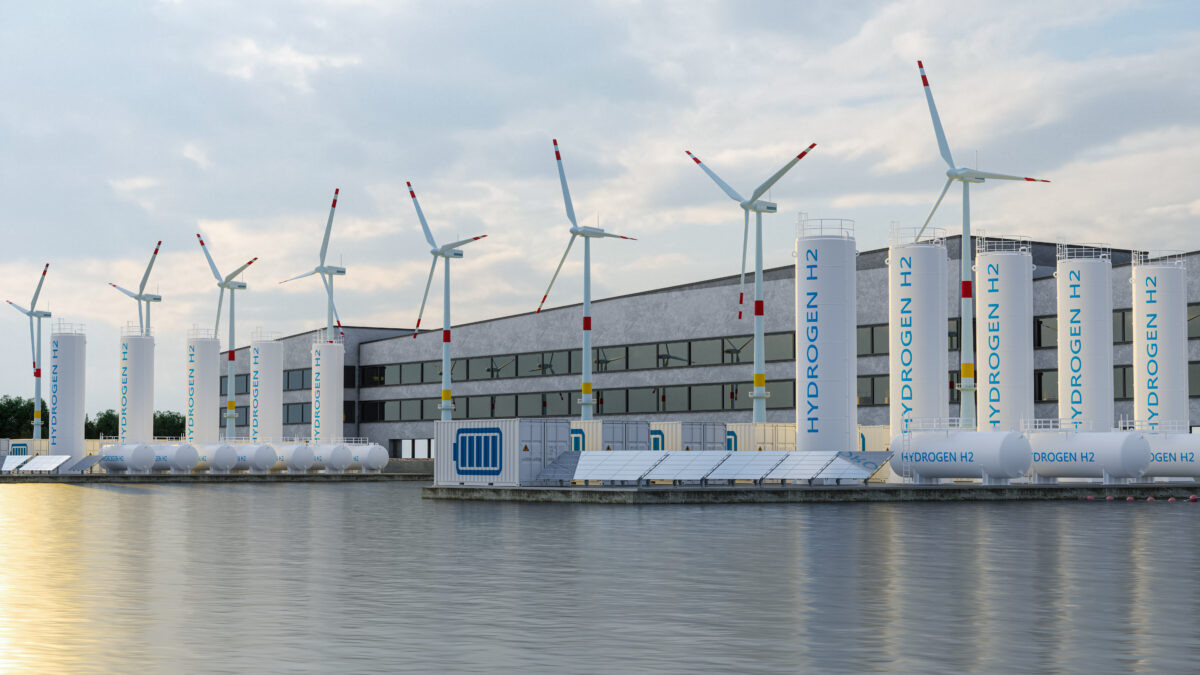
India’s clean hydrogen ambitions risk stalling due to weak storage, transportation, and safety infrastructure. Hydrogen storage—particularly high-pressure systems for mobility and distributed use—is a system-critical enabler that remains underdeveloped, underfunded, and poorly aligned with existing capital and policy instruments.
This study presents Gudlyf Mobility, a deep-tech startup part of Energy Leap, as an early signal of how targeted, patient, and system-oriented interventions can reduce structural friction in the highly technical hydrogen storage innovation space. The case does not yet demonstrate system-wide transformation; rather, it provides initial evidence of leverage and informs where impact and mission-aligned capital can accelerate ecosystem readiness.
The bottleneck
While India has prioritised clean hydrogen production under the National Green Hydrogen Mission, downstream enablers—storage, transport, and safety—have not progressed at a comparable pace. This creates four interlinked system failures.
- Infrastructure gap: India lacks domestic, full-stack hydrogen pressure-vessel testing and certification facilities
- Certification gap: Regulatory pathways force early-stage deep-tech start-ups to invest in full-scale production infrastructure upfront, as certification testing is permitted only after such facilities are established—significantly raising entry barriers
- Capital mismatch: Conventional venture capital timelines are misaligned with multi-year deep-tech hardware development and certification cycles
- Misaligned investment terms: Investor term sheets often carry conditions more suited to revenue-stage companies such as high IRR expectations, PAT-linked valuation metrics, or rigid CCD milestones. Early deep-tech hardware startups find these terms difficult to meet, delaying access to capital
- Capability constraints: Talent and institutional depth in composite materials and high-pressure hydrogen systems remain limited
In the absence of targeted intervention, these constraints reinforce each other, slowing innovation, deterring private capital, and increasing reliance on imported technologies.
How change is expected to happen
The underlying intervention hypothesis was developed based on a deep understanding of the system constraints:
Targeted early-stage de-risking + patient capital → Technology Readiness Level (TRL) advancement & certification readiness → private capital crowd-in → domestic manufacturing capability → reduced hydrogen logistics cost & improved safety → faster downstream hydrogen adoption
The early risks must be absorbed by patient and mission-aligned actors before market forces can operate effectively.

Dr. Ajay Mathur, former Director General, International Solar Alliance.
Case evidence: Gudlyf Mobility
Company: Gudlyf Mobility (Madurai, Tamil Nadu)
Technology focus: Indigenous Type IV composite hydrogen cylinders (350–700 bar) for mobility and distributed industrial applications.
Baseline (2022)
- Technology readiness: TRL 3 (concept-level)
- Certification pathway: Not defined
- Capital profile: Limited access to patient capital
Status as of 2025
- Technology readiness: TRL 7 (system prototype demonstrated in operational environment)
- Key technical milestones achieved:
- Completion of pressure-cycle testing equivalent to ~11 years of operational ageing
- Establishment of pilot-scale cylinder manufacturing capability (in progress)
- Commercial progress:
- Pilot deployments: 2
- Early customer segments explored: 5
- Capital mobilised:
- Non-dilutive support from Energy Leap: ₹0.20 crore ($25k)
- Follow-on capital unlocked: ₹5 crore (approximately 25X leverage) ($0.5 million)
- Early signs of attracting commercial capital—term sheets from strategic investors
Indicative early outcomes:
- Initial domestic capability creation in composite pressure-vessel design
- Reduced technical uncertainty for high-pressure hydrogen storage in Indian conditions
- Improved investor readiness for subsequent manufacturing scale-up
Energy Leap’s impact
$25K
cash prize awarded by Energy Leap
25X
capital support unlocked in 12 months
12-18 months
reduction in development timelines
Role of Energy Leap
Energy Leap’s role was designed to address coordination and risk-absorption failures rather than to substitute for private capital.
Core functions:
- Structuring blended capital (grant + flexible instrument) aligned with deep-tech timelines in partnership with Research and Innovation Circle of Hyderabad (RICH)
- Defining a staged technology de-risking and certification roadmap
- Identifying viable early market pathways to reduce adoption risk
- Providing platforms to connect with policy makers, technical experts, testing partners, and aligned investors
“Energy Leap has been a strong catalyst in Gudlyf’s journey. Their hands-on support across technology scale-up, brand visibility and go-to-market planning has helped us accelerate our progress across TRLs, from lab validation to customer pilots. The team brings deep sector insight, structured thinking, and the right industry connections, enabling us to sharpen our product market fit. We value Energy Leap as a long-term partner in building globally competitive hydrogen storage solutions.”
Dr. Ajeet Babu, Co-founder and CEO, Gudlyf Mobility
Impact to date
Direct outputs (achieved):
- TRL advancement: 3 →7
- Capital leveraged: 25X initial support
- Capabilities created: 1 pilot manufacturing asset in progress
Intermediate outcomes (emerging):
- Increased confidence among early-stage investors in hydrogen storage hardware
- Improved clarity on certification and testing pathways
- Early signals of domestic supply-chain development
Downstream outcomes (anticipated):
- Enabling conditions for hydrogen mobility and distributed industrial use
- Reduction in hydrogen transport and storage costs (exact savings being assessed)
- Improved safety benchmarks relative to incumbent solutions
- Contribution to domestic manufacturing and import substitution
Remaining system-level gaps
Despite progress at the company level, several system constraints persist.
- Absence of domestic hydrogen pressure-vessel testing and certification infrastructure
- Lack of harmonised national standards aligned with global benchmarks
- Continued investor reluctance toward long development and certification cycles
- Insufficient specialised talent pipelines in composites and high-pressure hydrogen systems
These gaps limit predictability and scalability across the sector and cannot be addressed by start-ups alone.
Priority action levers for ecosystem actors
Short-term (1–2 years):
- Support establishment of domestic, full-stack hydrogen storage testing and validation facilities (Key actors: Ministry of New and Renewable Energy (MNRE) + sector-aligned corporate CSR funds, research groups CSIRs or private sector or academic institutions)
- Support development of structured guidance on staged certification pathways and testing regimes for early-stage hydrogen storage hardware prototypes (Key actors: BIS/PESO, ARCI and academic institutions; philanthropic organisations)
- Fund structured de-risking programmes for early-stage hydrogen storage and transport hardware (Key actors: Impact investors/ philanthropies/ sector-aligned corporate CSR funds)
Medium-term (2–5 years):
- Create dedicated deep-tech hardware financing windows with milestone-based evaluation and lower return expectations (Key actors: Anusandhan National Research Foundation (ANRF), Technology Development Board (TDB), Indian Space Research Organisation (ISRO)
- Invest in specialised education and workforce development programmes (Key actors: MNRE, Ministry of Skills, Industrial Training Institutes (ITI), skills related state government nodal agencies, Impact funds)
Conclusion
India’s clean hydrogen transition will be constrained by storage and transport readiness unless deliberate action is taken to correct structural market and policy failures. Early de-risking has converted a high-uncertainty hard-tech bet into an investable scale-up opportunity, contingent on continued ecosystem and policy maturation.
For mission-aligned funders seeking to build durable climate infrastructure and domestic industrial capability, hydrogen storage remains a high-impact but under-addressed intervention point. Programmes such as Energy Leap provide an early template for how such system-level risks can be absorbed and reduced—but sustained, scaled engagement will be required to translate early signals into system transformation.
For further information, follow us on social media (LinkedIn I Twitter), or Contact Us to find out how we can help your leaders and organisation create people and planet-positive impact.