If we are doggedly focused only on short-term metrics, we miss the broader, more powerful shifts that occur when we invest in the long-term health of our ecosystem. The same is true for progress in gender equality.
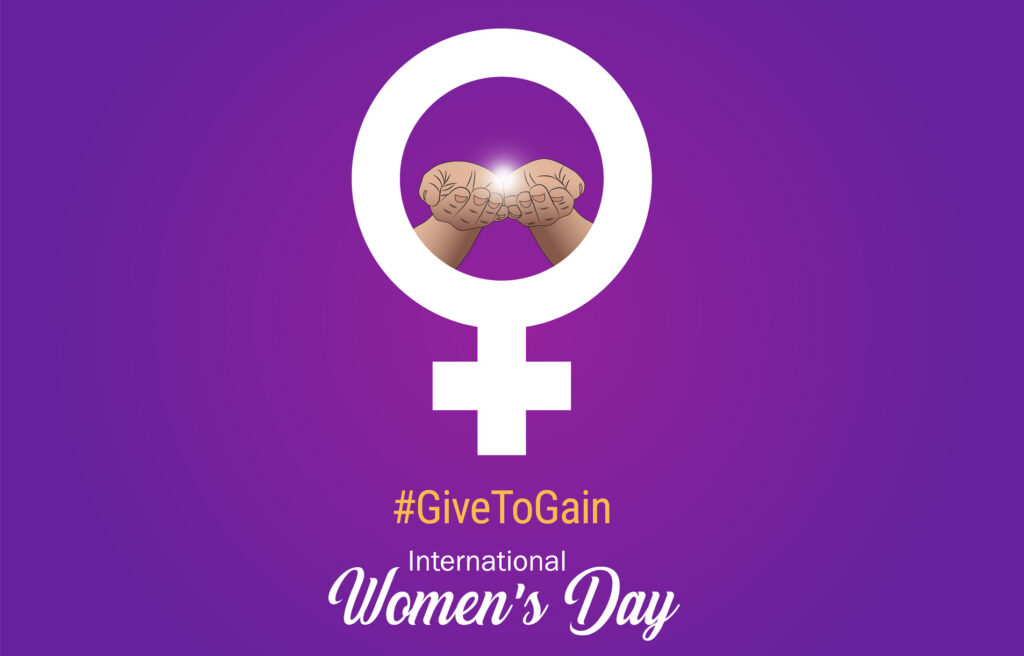
As we mark International Women’s Day 2026, the theme “Give to Gain” invites us to lean into a concept that is as ancient as it is disruptive: the power of reciprocity. In a corporate world often obsessed with the immediate—the quarterly result, the short-term win, the linear path to an outcome—the idea of “giving” can sometimes feel like a distraction; but in truth, giving can multiply our gains—both soft and hard.
I am often drawn back to a handful of ideas that challenge our conventional understanding of success. One is the motto of the Royal Military Academy Sandhurst: Serve to Lead. Another is the principle at the heart of John Kay’s book Obliquity: Why Our Goals Are Best Achieved Indirectly—the idea that our most complex goals are often best pursued through an indirect route rather than a linear one.
And then there is the concept of paying it forward—which, alongside serve-to-lead and Obliquity, shares something fundamental: all three are about the long term, and all three are about an indirect route to an outcome. That is precisely what makes them counter-cultural in most workplaces, and precisely what makes them so important.
Put in the context of gender equality and gender dynamics in the workplace, the way I process and absorb these concepts is actually quite simple. When we fixate only on short-term metrics, we miss the broader, more powerful shifts that occur when we invest in the long-term health of our ecosystem, and gender equality in a sense that is broader than looking only at representation needs exactly that kind of systemic shift.
Giving as leadership
So what does “Give to Gain” actually look like in practice? For me, it starts with leadership—full-fat, 360-degree leadership. It means always making time and space to think about the environment you want to create, not just the outcomes you want to deliver. It means making people feel heard. It means being genuinely cognisant of what people are navigating outside of work, because in order to enable someone to be the best they can professionally, you have to have some awareness of the environment they are operating in personally. And it is true that for women in the workplace, that “environment” is very often more complex.
This is where giving locks back into sustainable value creation. To create sustainable value, you have to think long term. To think long-term, you have to take into consideration the broader, softer dimensions of what it means for a business—and an individual—to be truly successful. You are giving attention now in order to create value further down the line. You are divorcing short-term utility from long-term impact.
The discomfort of the mirror
The IWD 2026 call to action is clear: give your support by calling out stereotypes, challenging discrimination, questioning bias, and celebrating women’s success. In principle, nobody disagrees with any of that. But in the day-to-day, it can get a little uncomfortable.
Holding up a mirror to bias in a high-stakes meeting is rarely welcomed in the moment. Allyship is embraced in principle, but when it actually plays out—when someone is sitting uncomfortably in a room having their assumptions challenged—it can be difficult to receive constructively. We have to accept that this discomfort is part of the process of change, but it is not a reason to stop.
The more we do it, the more it becomes normalised. The more normalised it becomes, the less it needs to be called out as something exceptional. We hold up the mirror now so that, eventually, we won’t have to.
That is the give. The gain is a world of work where these behaviours are simply how we operate—not a special effort, not an act of allyship, just the baseline.
For further information, follow us on social media (LinkedIn I Twitter), or Contact Us to find out how we can help your leaders and organisation create people and planet-positive impact.