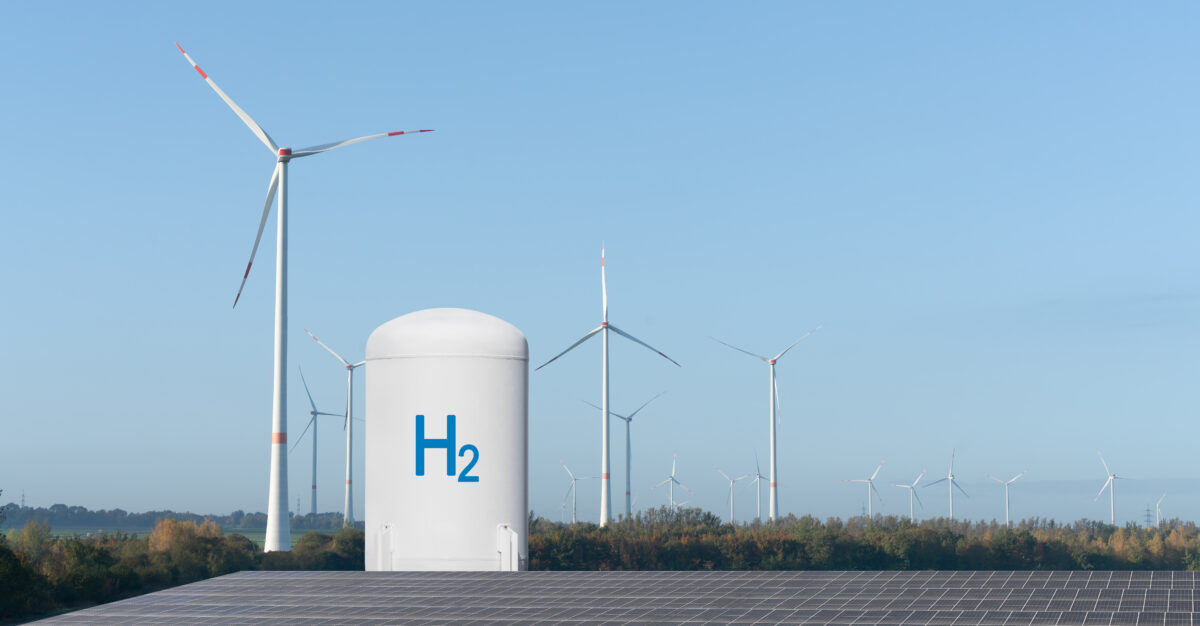
Unlocking India’s hydrogen potential, from policy ambition to commercial reality

India possesses all the fundamental ingredients for green hydrogen success—we benefit from abundant low-cost renewables, substantial infrastructure advantages, and the technological capability to lead globally. However, industry and government leaders face a sobering reality today: despite years of strategic planning and policy announcements, progress remains slow. 

Strategic enablers for a sustainable built environment

As India’s construction boom reshapes skylines and communities, the built environment stands at a critical inflection point. With the sector responsible for nearly a third of the nation’s emissions—and 60% of the building stock needed by 2050 yet to be built—the choices we make today will define India’s climate legacy for generations. The stakes are high: without bold, systemic action, …

Evolution of voluntary carbon markets across the energy landscape

Having established these proven models and built strong coalitions across sectors, we are positioned to dramatically amplify our impact. The learnings and frameworks developed through years of hands-on work with partners have laid a robust foundation for delivering innovative and scalable growth models. Our experience has shown not just what needs to be done, but specifically how to do it in ways that create lasting value for businesses and society alike.

Future of mobility: Charging infrastructure for electrification of road transport

As the transportation sector confronts unprecedented challenges in reducing emissions, electric vehicles (EVs) emerge as a critical component of the global shift towards cleaner, smarter mobility systems.

With transport accounting for 28% of EU greenhouse gas emissions, there’s an urgent need for innovative solutions that transform how people and goods move across cities and regions.

Build Ahead UK: Identifying net zero building interventions

The UK’s built environment stands as the second-largest contributor to the nation’s carbon emissions, and the urgency to decarbonise it is paramount to achieving the 2050 net-zero target. With the sector accounting for a quarter of the country’s total emissions, a radical shift in how buildings are designed, constructed, and operated is essential.  Build Ahead UK presents this insight report, …

Accelerating India’s Circular Transformation

As the transportation sector confronts unprecedented challenges in reducing emissions, electric vehicles (EVs) emerge as a critical component of the global shift towards cleaner, smarter mobility systems. With transport accounting for 28% of EU greenhouse gas emissions, there’s an urgent need for innovative solutions that transform how people and goods move across cities and regions.

A roadmap for the future of clean mobility

As the transportation sector confronts unprecedented challenges in reducing emissions, electric vehicles (EVs) emerge as a critical component of the global shift towards cleaner, smarter mobility systems.

With transport accounting for 28% of EU greenhouse gas emissions, there’s an urgent need for innovative solutions that transform how people and goods move across cities and regions.

Natural Hydrogen: India’s Next Frontier in Clean Energy

Hydrogen is critical in the global push toward decarbonization, particularly to achieve a low-carbon economy. Current hydrogen production processes emit around 1,200 million tons of CO2 annually, accounting for ~3% of global carbon emissions. The majority of the 95 million tons of hydrogen produced in 2022 came from fossil fuels, with natural gas accounting for about three-quarters of the production …

Financing the Decarbonization of the Indian Economy

India is poised for strong economic growth over the next few decades. However, as the world’s third highest greenhouse gas (GHG) emitter1, balancing economic growth with  environmental impact is imperative. Moreover, the country has already committed to reducing the carbon emissions intensity of its gross domestic product (GDP) by 45% by 2030 and to net zero by 2070.  According to a …

Your EV battery’s second act can power India’s future

As India’s electric vehicle revolution gains momentum, the country faces a critical challenge: building a circular ecosystem for electric vehicle (EV) batteries. With projections showing that by 2030, 128 gigawatt-hours’ worth of EV batteries will reach their end-of-life for primary automotive applications, the imperative to develop robust recycling and second-life infrastructure has never been more urgent.