Interplay of Green Hydrogen Technology Innovation & Predictable Carbon-Cost Signals

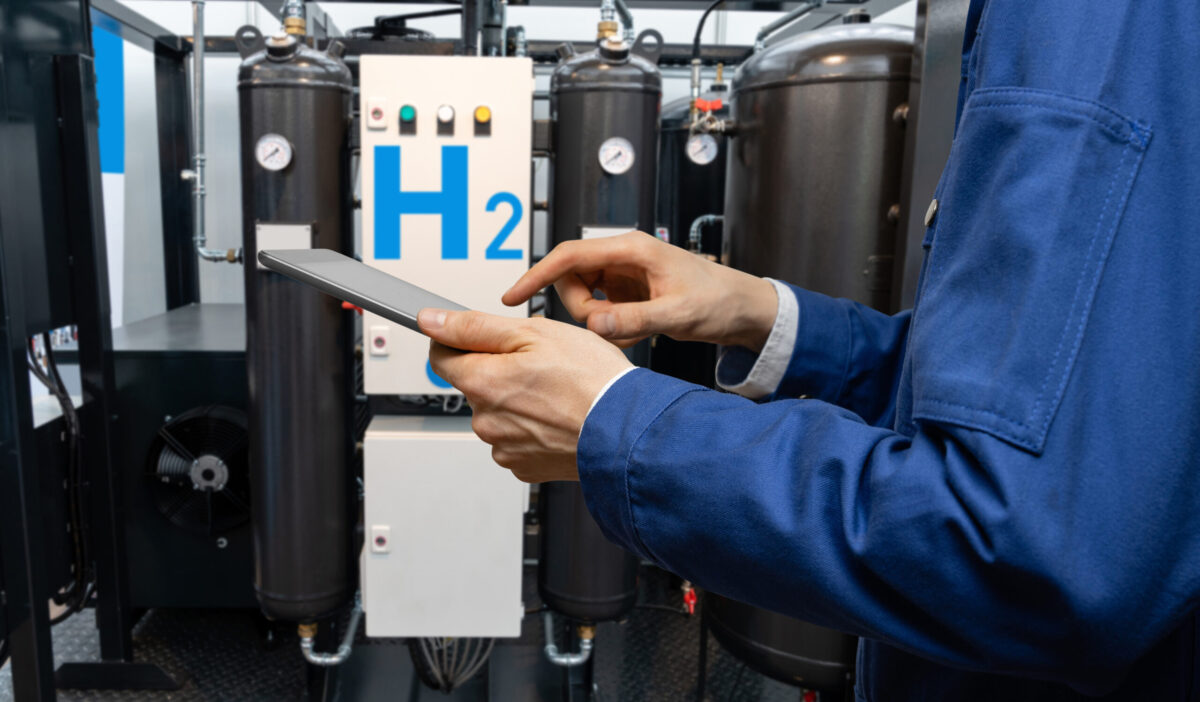
Engineer inside hydrogen factory

India’s growing interest in low-carbon hydrogen reflects a broader global trend: several industrial sectors are beginning to explore transition pathways where molecular fuels may play a long-term role. Electrolyser (technology required for producing hydrogen from renewable electricity) manufacturing capacity is expanding, and early pilots are emerging across green ammonia, mobility, and steel. As attention shifts from technical feasibility to commercial viability, a key strategic question emerges: what actually drives green hydrogen from early projects into large-scale market adoption?

Enabling India’s SAF Roadmap for Aviation Decarbonization via Hydrogen

India’s aviation sector has grown rapidly over the past decade, with domestic passenger numbers increasing from around 50 million in 2010 to approximately 230 million in 2024. India will require a rapid scale-up in SAF production, but the availability of sustainable feedstocks remains a critical bottleneck.

Green Ammonia Price Discovery in India: A Step Toward Sustainability

Air shot of an industrial estate

In August 2025, the Solar Energy Corporation of India (SECI) announced a record-low price of ₹49.75 per kg ($569 per MT) for green ammonia under the Strategic Interventions for Green Hydrogen Transition (SIGHT) program, a significant drop from the 2024 H2Global auction’s ₹100.28 per kg ($1,153 per MT). This article examines the price discovery, auction winners, cost drivers, broader implications, including import substitution, export potential, market development, and associated risks and mitigants, along with a detailed table of the auction winners.

Accelerating green hydrogen: Unlocking India’s technological prowess

India is at a pivotal moment in the green hydrogen transition. With world-class renewable resources, deep engineering capabilities, and a fast-maturing innovation ecosystem, the country can lead the next wave of clean industrial growth. The question is no longer “if” — it’s “how fast” we can move from promising prototypes to commercial deployment at scale.

India’s green hydrogen ambitions: Where do we stand?

The Indian government’s National Green Hydrogen Mission, launched in early 2023, set an ambitious target of 5 million tonnes (MT) of green hydrogen production in India by 2030. However, over two years down the line, significant challenges persist despite plentiful project announcements and private sector financial commitments, leading to slow execution and raising concerns about meeting this goal.

Green hydrogen in India’s petroleum refining and petrochemical sector

As India accelerates its journey toward net zero, the decarbonisation of its petroleum refining and petrochemical sector stands as a critical frontier. Yet, the transition is complex. The sector faces a unique set of challenges: high capital costs, evolving policy frameworks, and the need for robust supply chains and infrastructure.

Unlocking India’s hydrogen potential, from policy ambition to commercial reality

India possesses all the fundamental ingredients for green hydrogen success—we benefit from abundant low-cost renewables, substantial infrastructure advantages, and the technological capability to lead globally. However, industry and government leaders face a sobering reality today: despite years of strategic planning and policy announcements, progress remains slow. 

Natural Hydrogen: India’s Next Frontier in Clean Energy

Hydrogen is critical in the global push toward decarbonization, particularly to achieve a low-carbon economy. Current hydrogen production processes emit around 1,200 million tons of CO2 annually, accounting for ~3% of global carbon emissions. The majority of the 95 million tons of hydrogen produced in 2022 came from fossil fuels, with natural gas accounting for about three-quarters of the production …

Financing the Decarbonization of the Indian Economy

India is poised for strong economic growth over the next few decades. However, as the world’s third highest greenhouse gas (GHG) emitter1, balancing economic growth with  environmental impact is imperative. Moreover, the country has already committed to reducing the carbon emissions intensity of its gross domestic product (GDP) by 45% by 2030 and to net zero by 2070.  According to a …