India’s Green Hydrogen Test: Scale or Stall

India is becoming supply-ready, yet the market is still demand-constrained. The next phase will be won not by who announces the biggest project, but by who can convert ambition into bankable, executed deployments.

Interplay of Green Hydrogen Technology Innovation & Predictable Carbon-Cost Signals

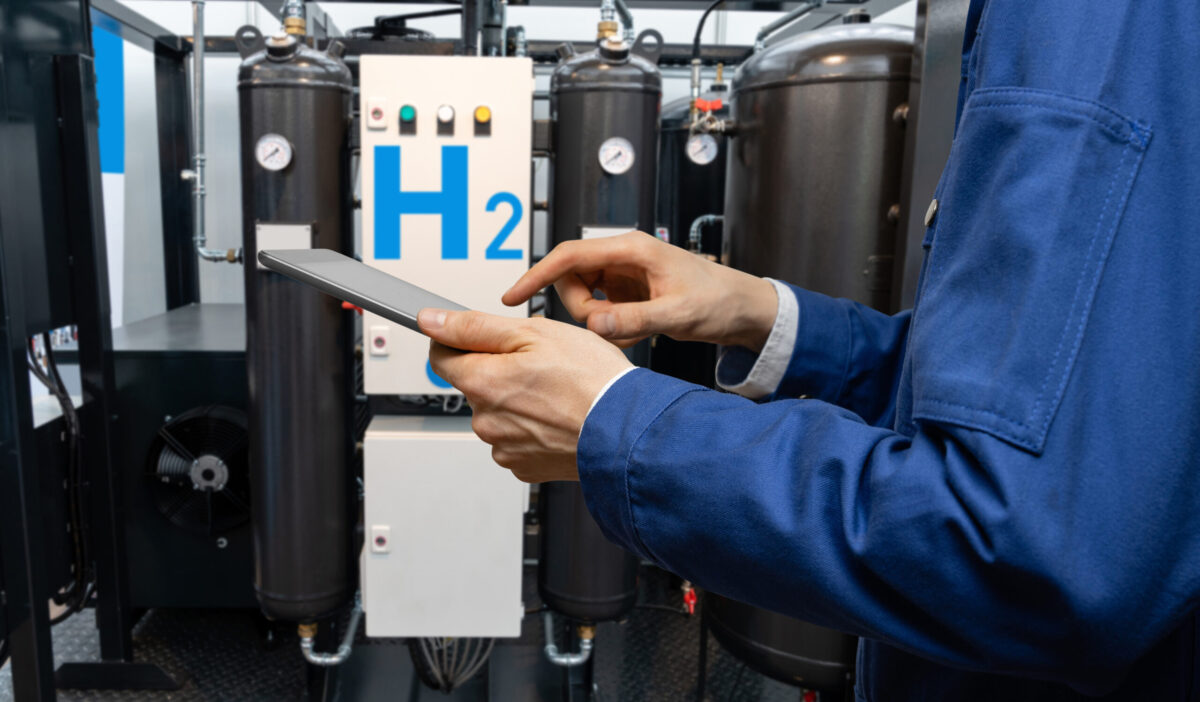
Engineer inside hydrogen factory

India’s growing interest in low-carbon hydrogen reflects a broader global trend: several industrial sectors are beginning to explore transition pathways where molecular fuels may play a long-term role. Electrolyser (technology required for producing hydrogen from renewable electricity) manufacturing capacity is expanding, and early pilots are emerging across green ammonia, mobility, and steel. As attention shifts from technical feasibility to commercial viability, a key strategic question emerges: what actually drives green hydrogen from early projects into large-scale market adoption?

Green Ammonia Price Discovery in India: A Step Toward Sustainability

Air shot of an industrial estate

In August 2025, the Solar Energy Corporation of India (SECI) announced a record-low price of ₹49.75 per kg ($569 per MT) for green ammonia under the Strategic Interventions for Green Hydrogen Transition (SIGHT) program, a significant drop from the 2024 H2Global auction’s ₹100.28 per kg ($1,153 per MT). This article examines the price discovery, auction winners, cost drivers, broader implications, including import substitution, export potential, market development, and associated risks and mitigants, along with a detailed table of the auction winners.